Physical Description
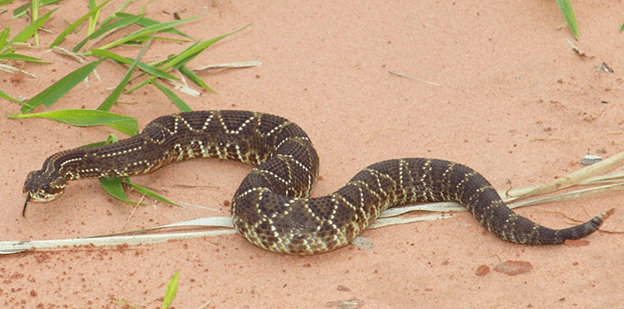
South American rattlesnakes can get up to six feet long. They have a very thick body. They are dark brown and dark green with some lighter colors and have a diamond pattern along there back but are not diamond back rattlesnakes. Male South American rattlesnakes are a bit bigger than the females. The South American rattlesnakes’ tail is not as big as other North American rattlesnakes, but it is still prominent. They can also camouflage very well in long grasses.
Habitat
South American rattlesnakes like to live in grasslands and sometimes migrate to higher ground to avoid floods. They are territorial and usually return to the places they were born in.
Diet and Behavior
South American rattlesnakes are nocturnal and are mostly active from 6pm to 9pm. They lie near paths that small animals take and ambush them. They inject the venom then let the animal try to run away. This is so the snake does not get hurt by the thrashing animal while the venom kills them. The snake will then eat it once it is dead.
Fun facts
Native Americans used deer livers that they would get rattlesnakes to bite to make poison arrows. Using the liver made the poison even more toxic. They also would dip the arrow heads into the venom glands of a snake that they recently killed. The snake venom is very toxic because it causes issues with the nervous system and on tissue unlike most snakes which just cause issues with one. Brazil gets around 20,000 snakebites per year and around 10 percent of them are from the South American rattlesnake. They live for around 10 to 25 years.
 snake stuff